
The second year of Map Camp is nearly upon us. If you are joining us tomorrow (3rd October) we’d love to hear about your highlights from the day, questions you might have for the community and just the chance to bring some of the insights and stories from the event to those who are unable to attend.
Events
Map Camp, London 2018
· Updated
From the read-only archive of the Wardley Mapping community forum (2018–2023). Category: Events. Posts are by their authors. Links to sites that moved or closed point to link notes.
Presentation #1: Using maps to create focus and leverage
by Liam Maxwell
My highlights:
-
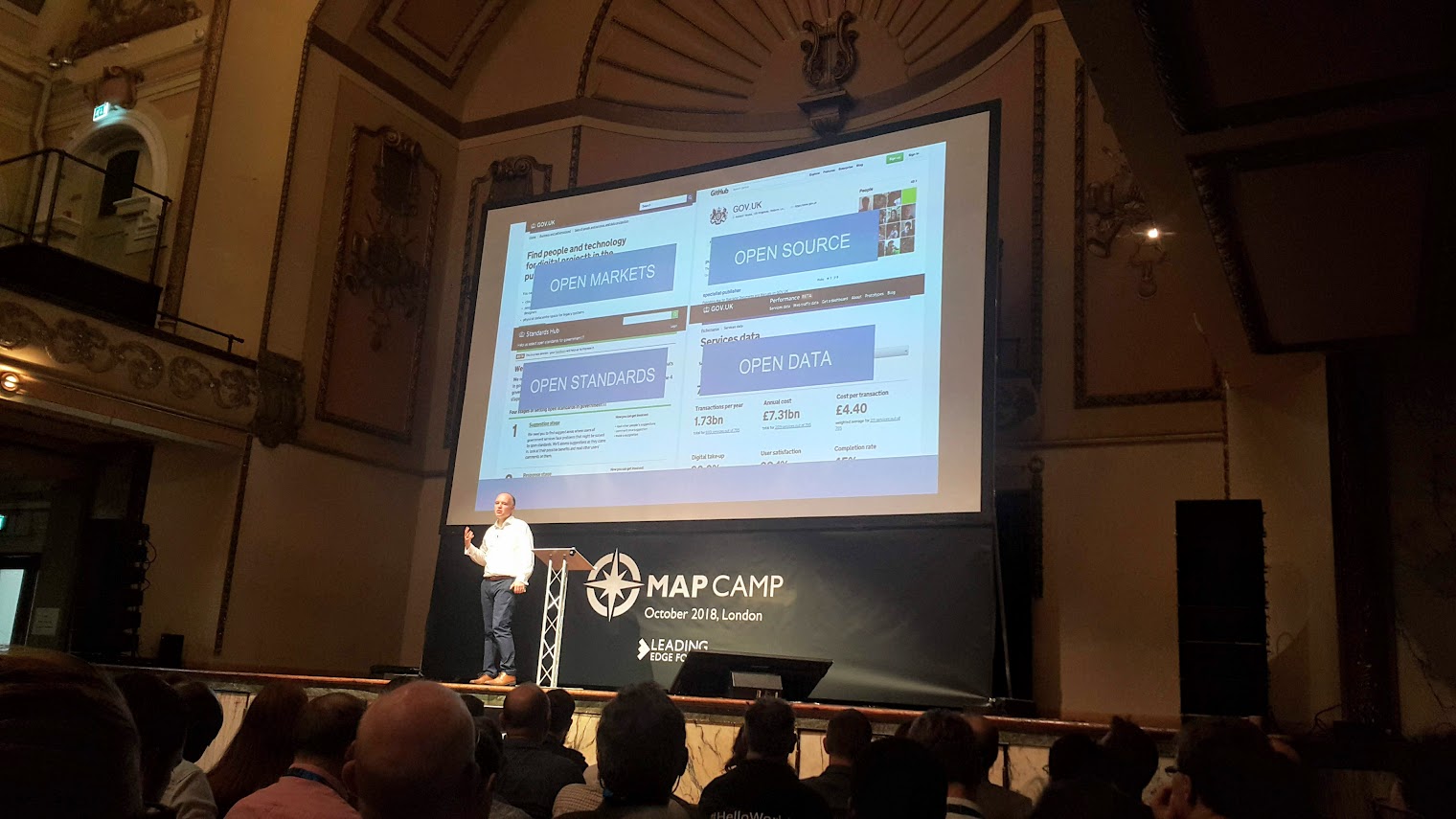
Becoming open was the key to improvement. Lack of change was in the interest of existing providers who were selling legacy.
-
Existing government structure did not support cooperation. Change was not about the tech, and could not be procured. Without building situational awareness, change would not be possible. Making people aware of the situation and allowing them do make their own decisions is the right thing to do. (Note: mentioned by @swardley a couple of times - people are not daft, but trapped in the system).
-
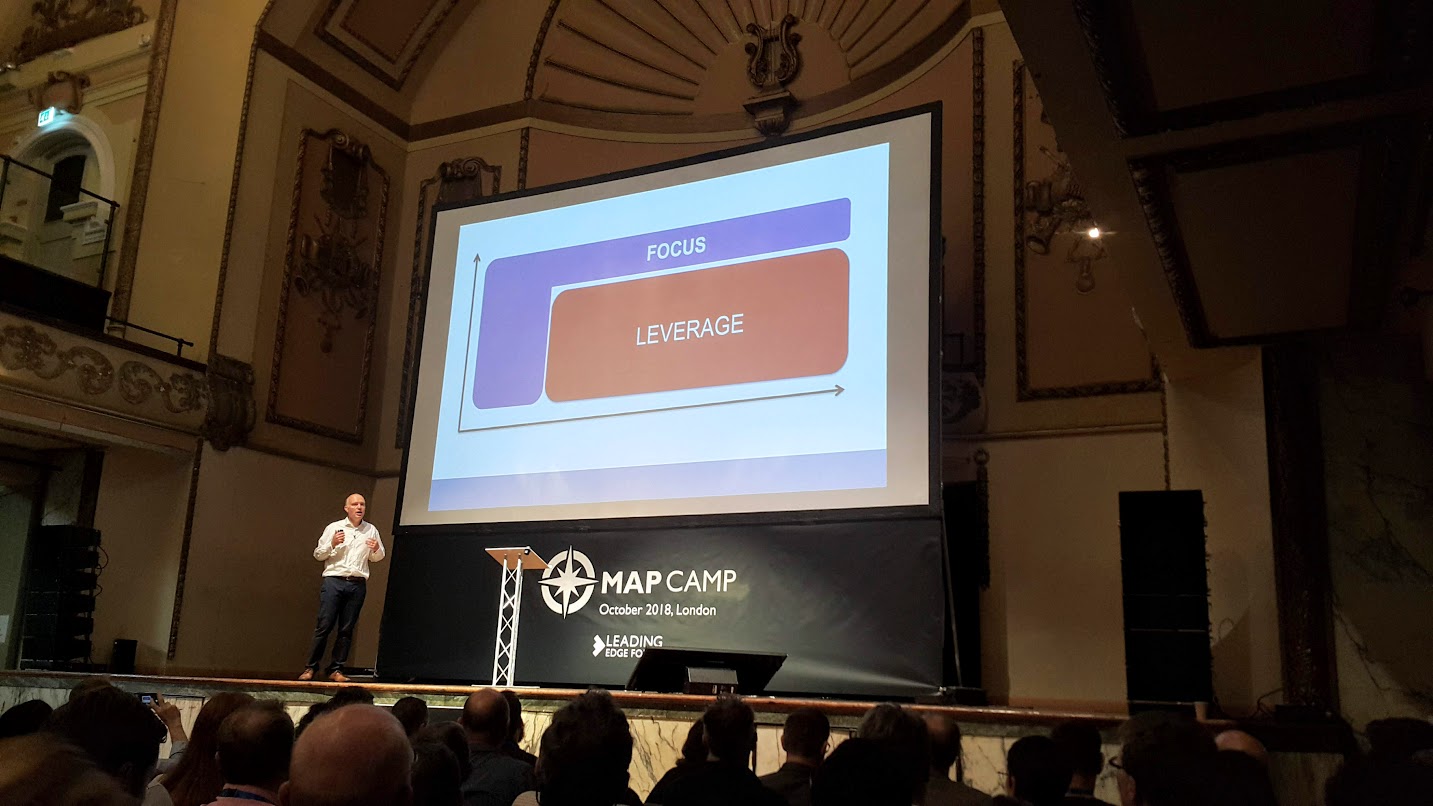
A map highlights where you should focus on research, and where you should use available solutions. You do not want to build everything by yourself.
-
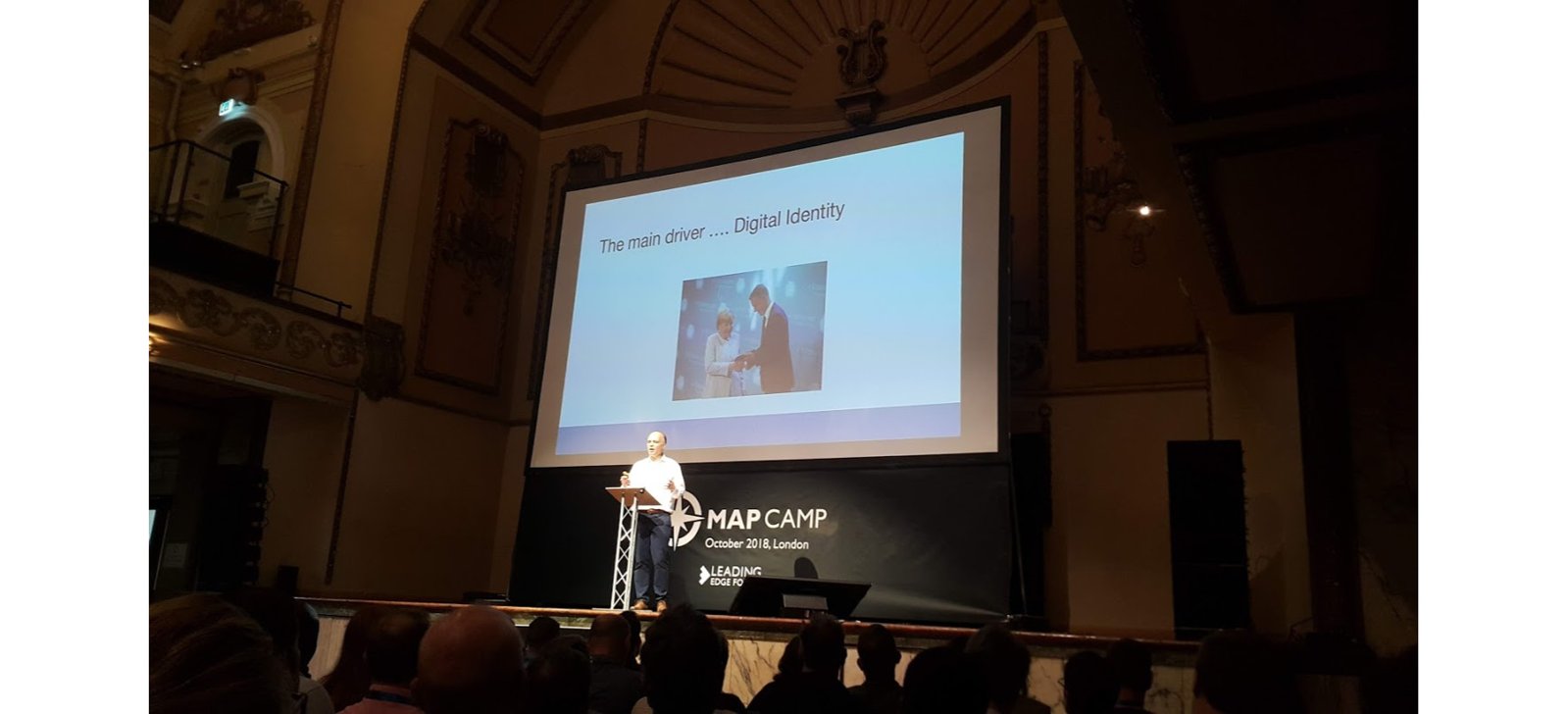
The future will be impacted by Digital Identity. This makes me think what does it mean for me, personally.
-
4 000 000 GBP savings because people have better access to the information on Gov web pages and do not call the services as often as they did (reduction by half).
Presentation #2: Mapping a new venture
Highlights:
-
Significant savings were made with mapping:
@Rachel0404 used Wardley Mapping at these companies. £35 million in cost savings over 5 years at DoE and use of Pioneer, Settler, Town Planer at NHS. #map18 #mapcamp @lefep pic.twitter.com/Zhxvld4Ly7
— Glen Robinson (@GlenPRobinson) October 3, 2018 -
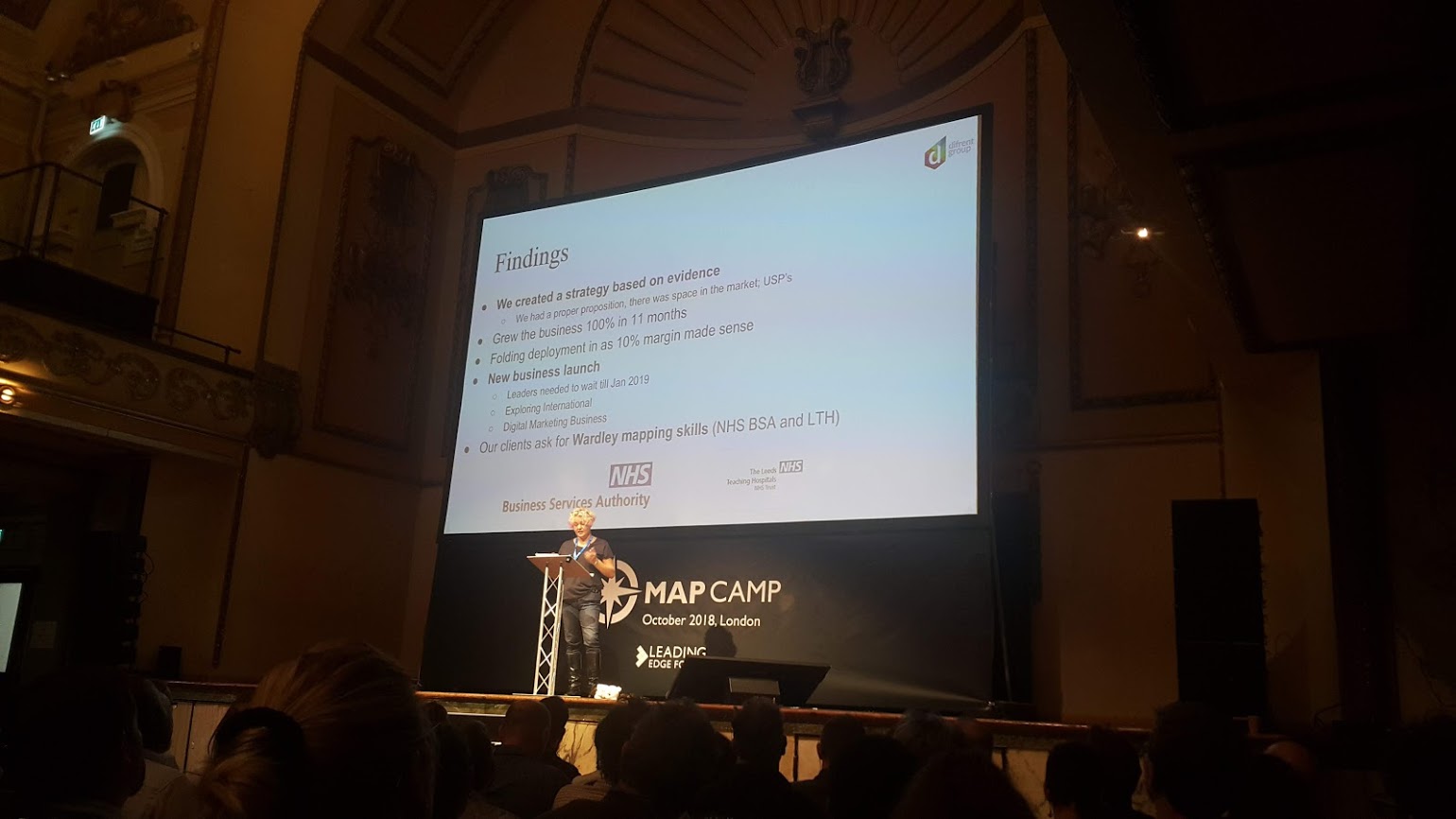
Initial gut feeling about a market opportunity was validated with the mapping, and user identification revealed what to expect from the market.
The sense of confidence was emanating from the presentation, as the uncertainty has been tamed with maps.
"We created a strategy based on evidence."!
Presentation #3. Mapping one’s regulatory world
by Julie Pierce
Before I describe my highlights - I need to mention that Julie gave a speech also a year ago, and I think she has shown this map, and commented something along those lines:
“This maps reveals the complexity of our environment”.
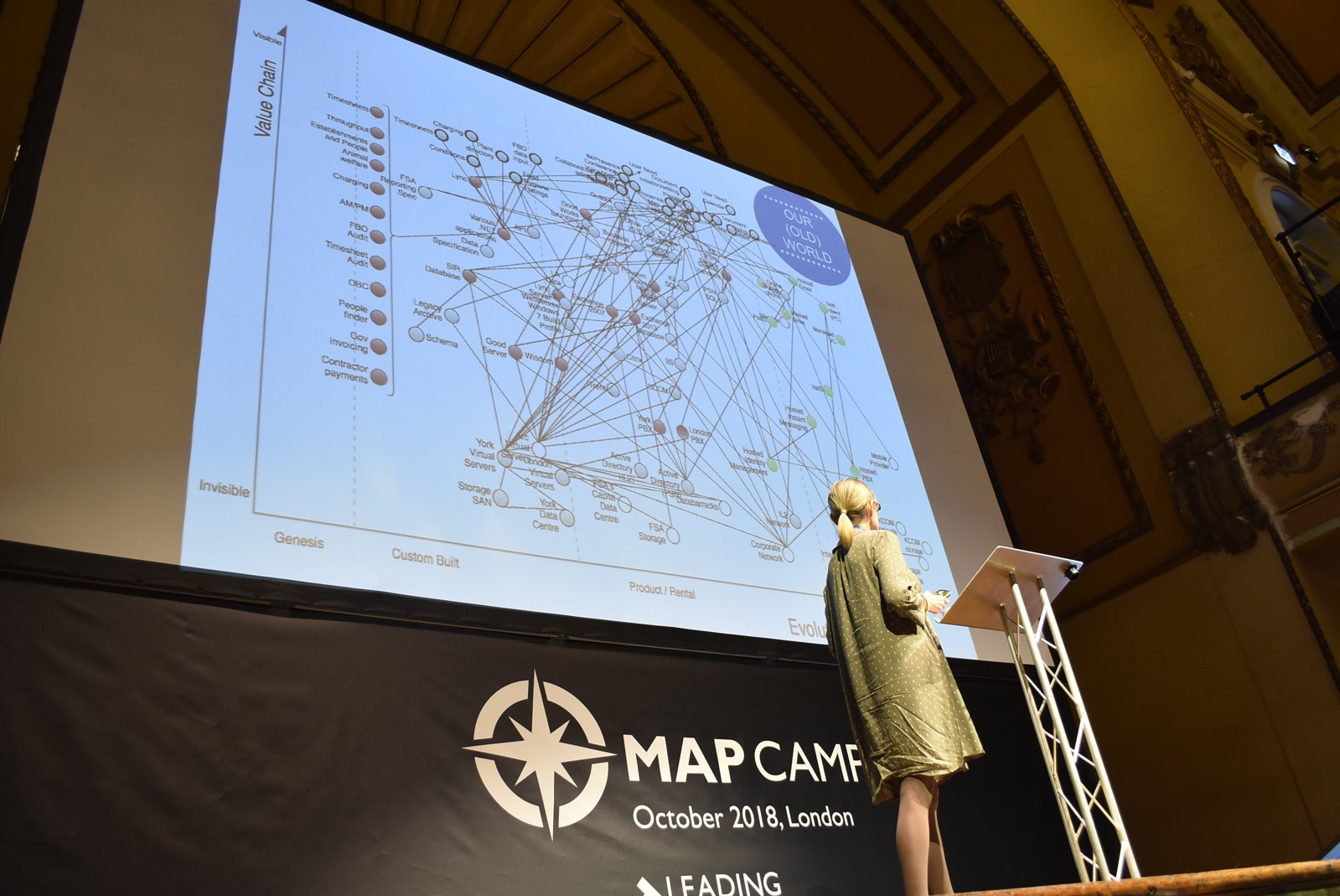
Such complexity makes it difficult to introduce any changes or even work, so one of her key messages this year was to map a single domain(problem) instead of an entire environment. And then she showed something truly amazing:
This is the state of a certain solution used by the Food Standards Agency before transformation:
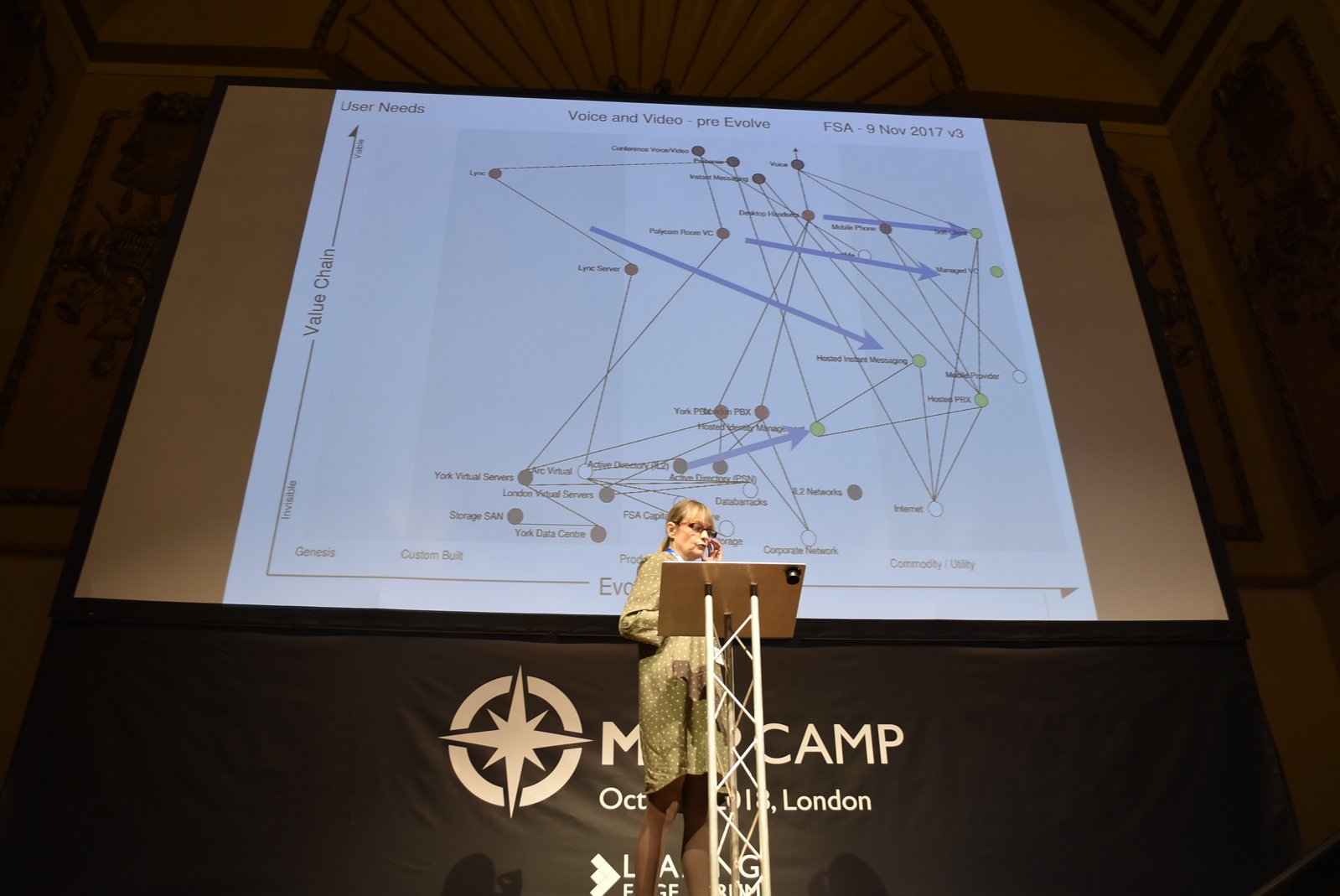
And after following the mapping principles:
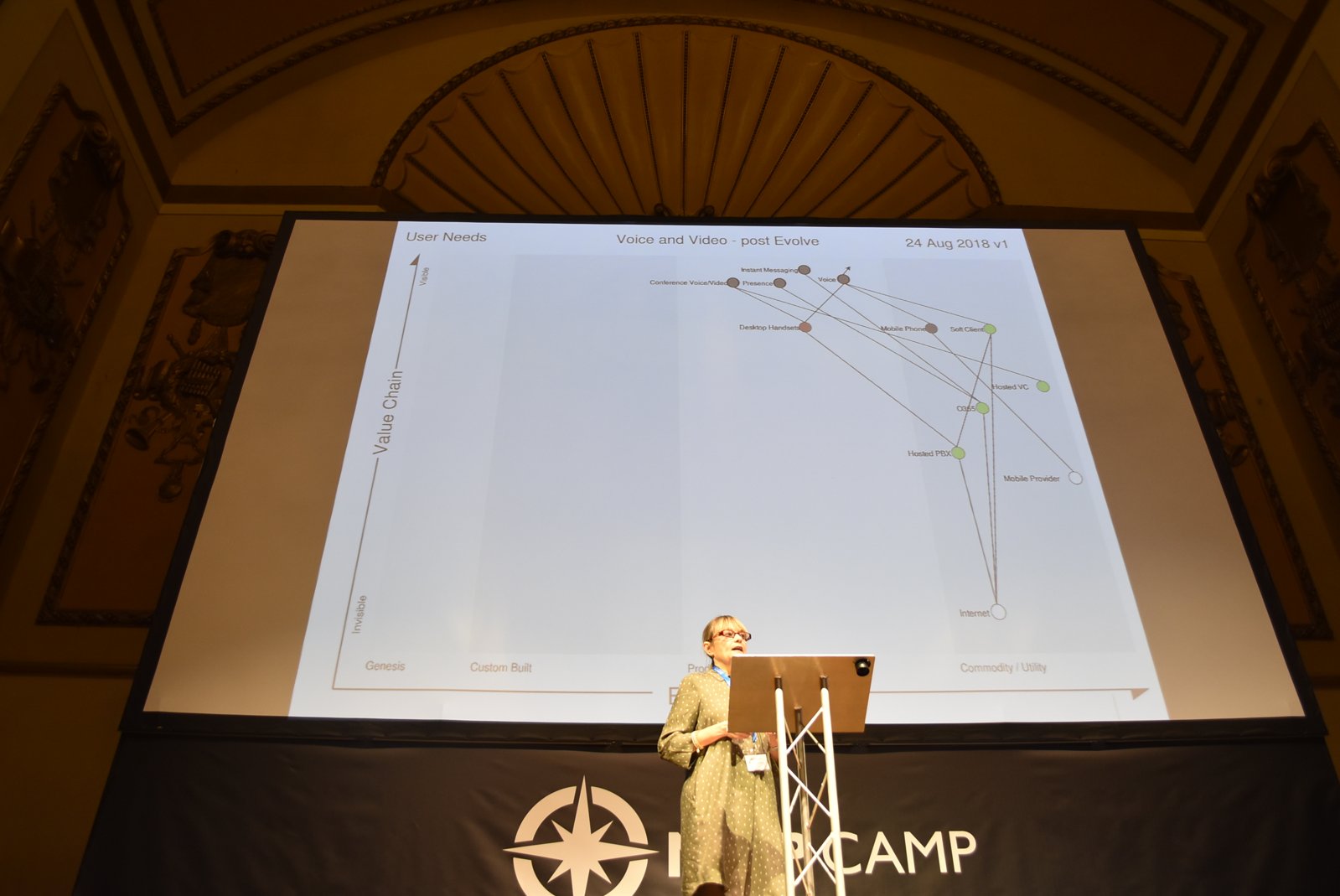
The moment she has revealed this slide, the audience gave applause not allowing Julie to speak. Indeed, words were not necessary to understand how simple was the new approach and the amount of expected savings. She later explained that the cost of maintaining this solution was reduced by 11%.
Further parts covered the Brexit and its impact on the British food market, as 90% of food is imported from EU, and the FSA will no longer be able to access and analyse foreign data to ensure the food is safe (no contamination, adulteration, related crimes, biological hazards or unexpected allergens).
Finally, she presented what the FSA is going to do:
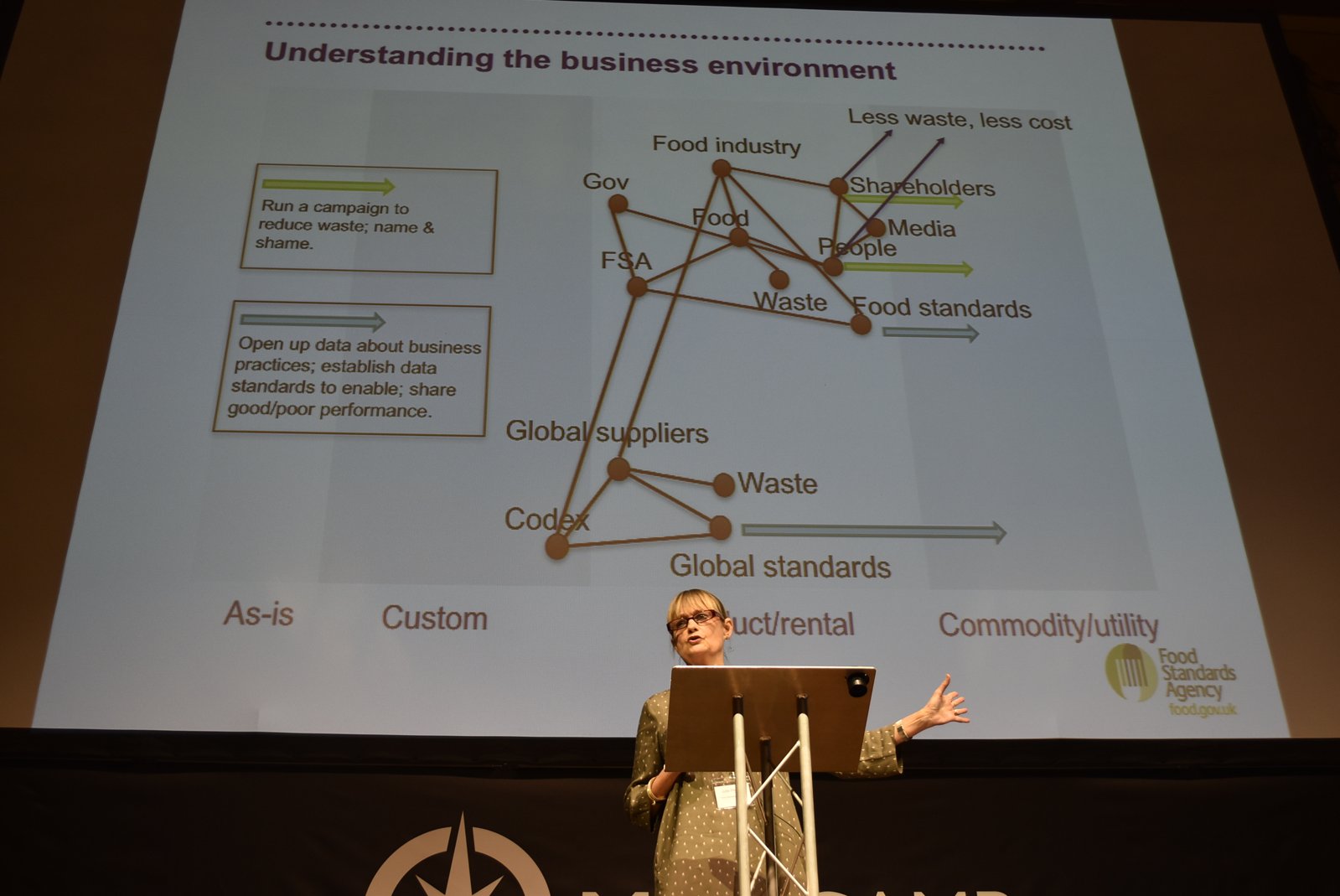
This simple slide reveals the Strategy - a campaign about waste will be run to leverage shareholders greed (wasted money) and people care about the environment (wasted food has a lot of negative impact on the environment), and that pressure should force food suppliers to adheres to certain standards, amongst which there will be revealing data about how the food is produced.
Will it work? Probably yes, but it is a long-term game.
Do you think it would be possible to figure this out without a map?
Presentation #4: Mapping and the UN
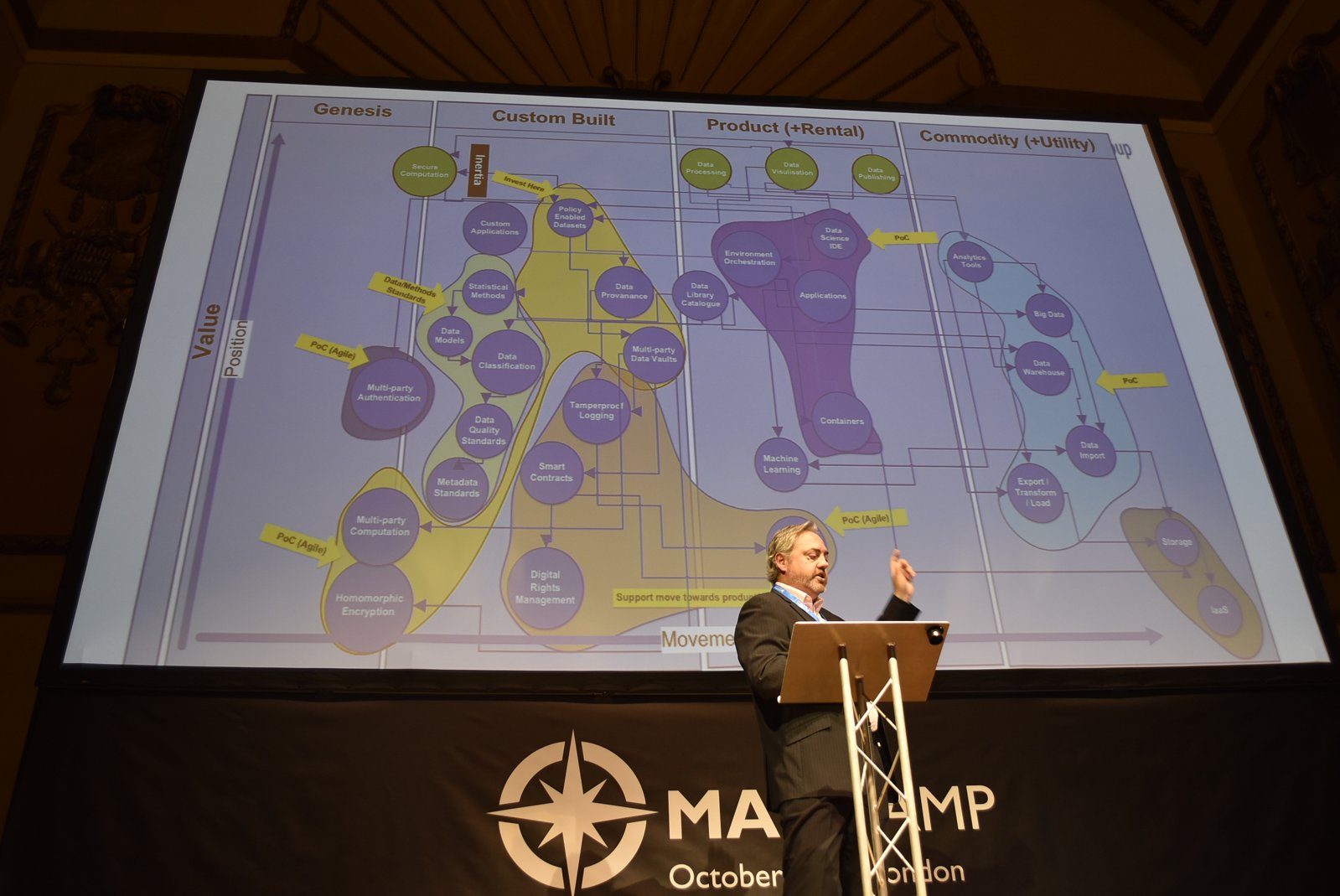
Photo by @map_camp
We just did nothing and here it is…
I think it was one of the most important insights.
A significant investment was required to meet a certain requirement, which was even more significant because of a very limited UN Statistical Commission budget.
UNSC just waited for 15 months until the market recognised that this specific need affected more organisations and provided an out-of-the-box solution. Significant savings achieved by waiting. That is the skill, to know, when to wait!
Presentation #5: Maps, Ships, Trains and Automobiles
It was of those presentation that was not explicitly about mapping, but rather about areas adjacent to mapping. James stated that outcomes matter more than targets, and then presented us this:
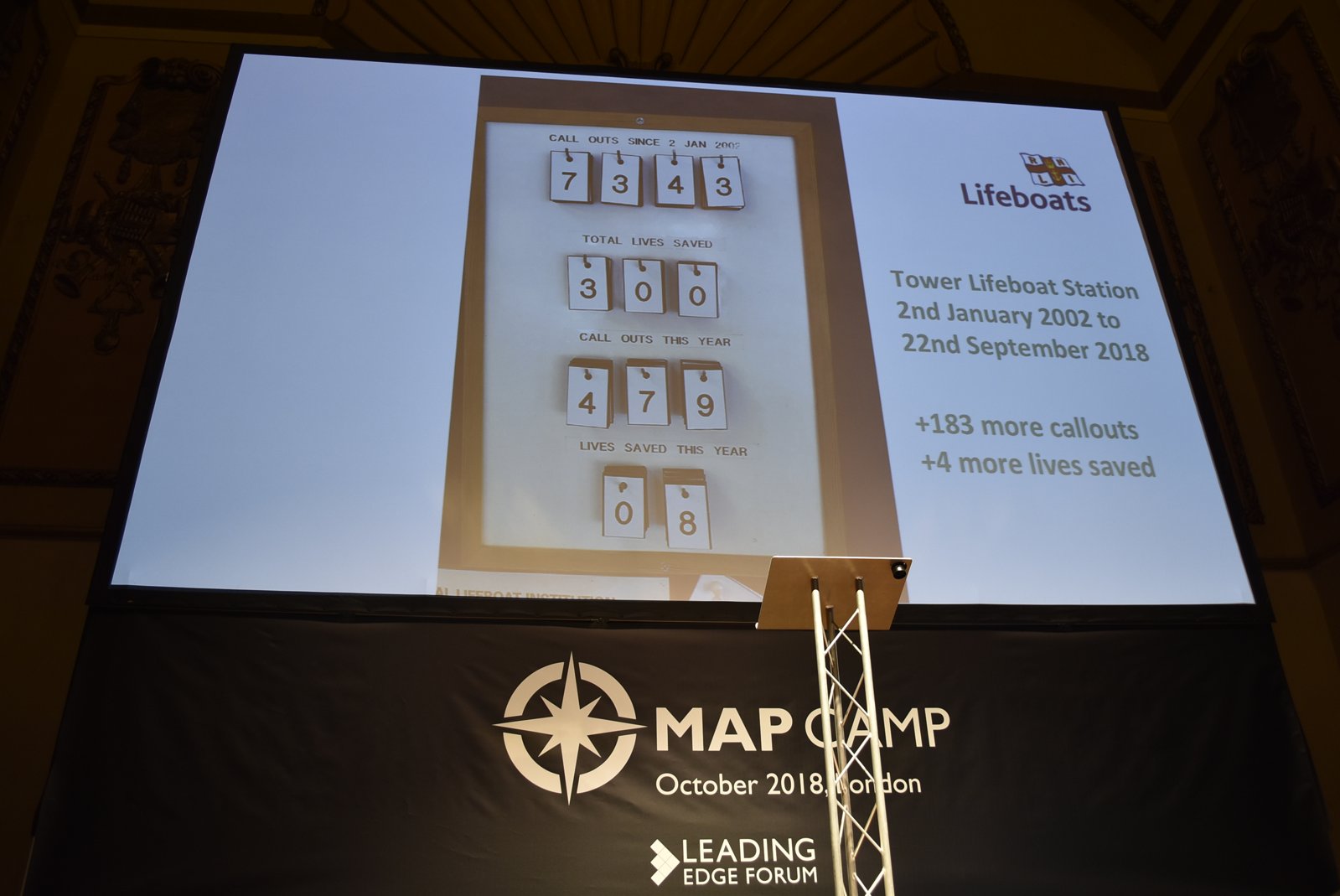
Improving the efficiency of a service which allows for transferring incident notifications between different units (f.e. police and lifeboats operators) saved a number of human lives. In that context, it is not really that important which technique was used.
Other part of the presentation covered one of the most important aspects of the enterprise strategy management - a spend control:
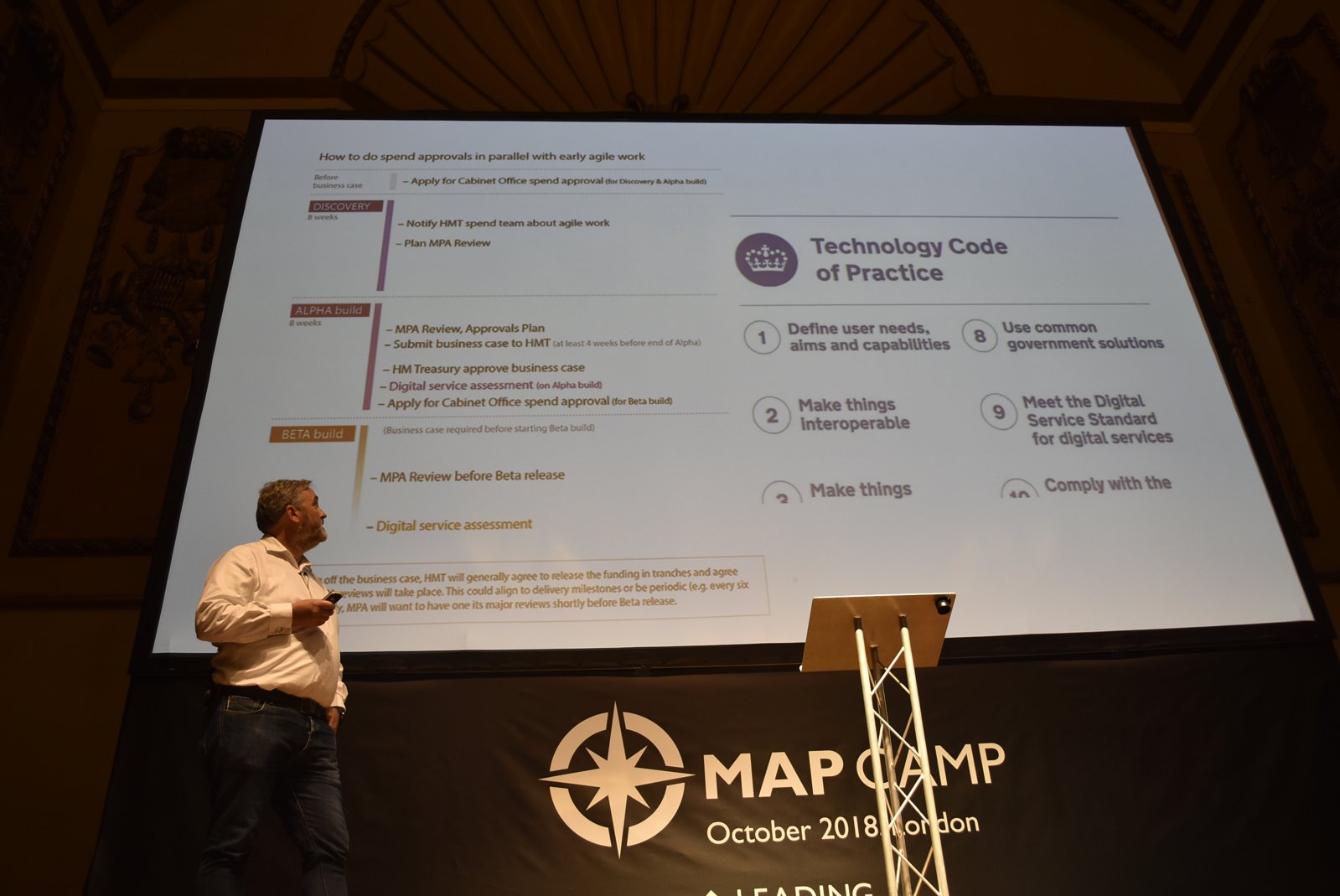
This is the link that provides more details about the spend control - definitely worth reading.
Presentation #6: Using maps as a communication tool
Highlights:
Three memorable bullets that resonated with me very strongly:
- “Napoleon had a map in 1812…”
- Money does not guarantee execution success
- CEOs always act on leading indicators of good news, but only act on lagging indicators of bad news
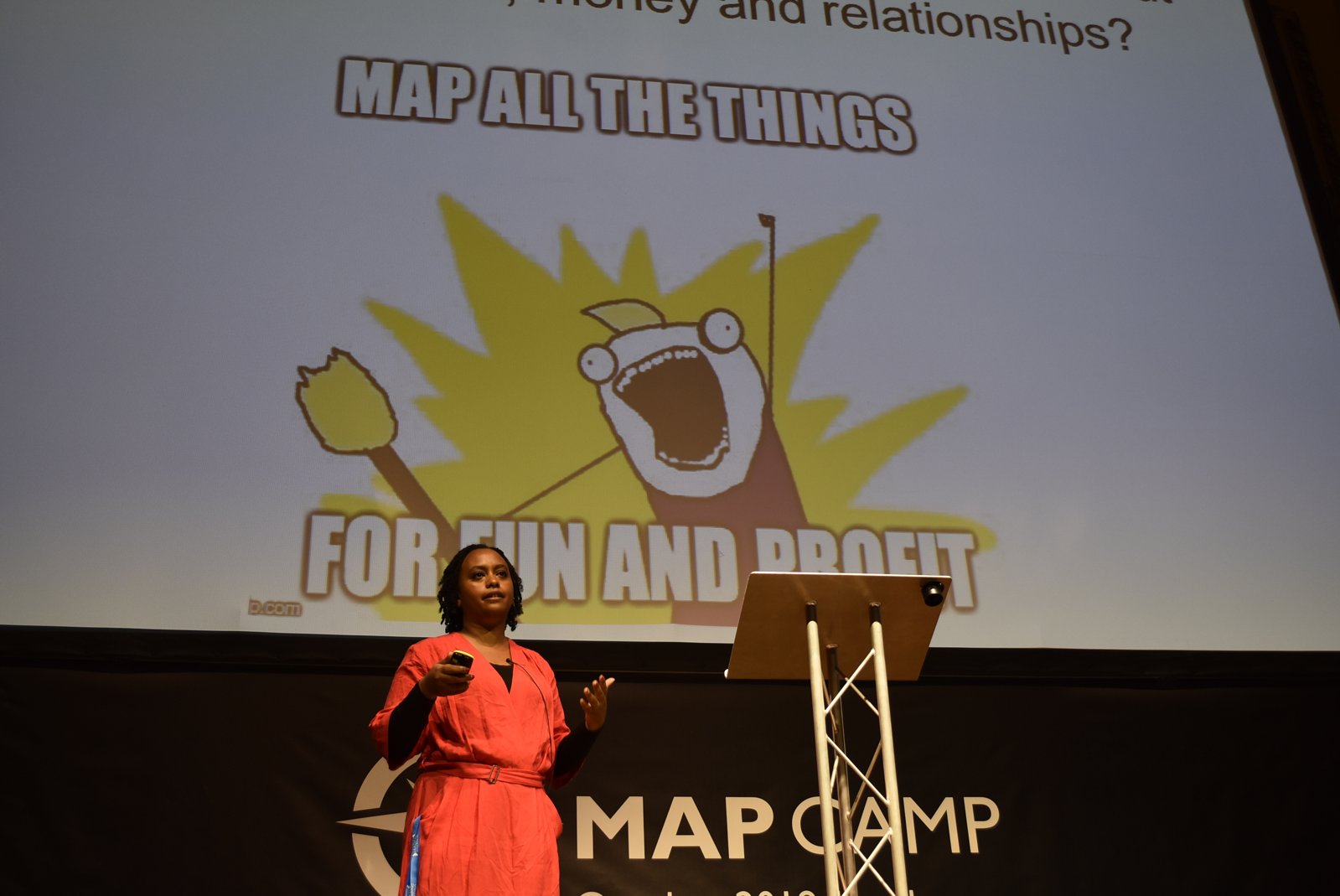
It was a very powerful reminder about how important it is to stay humble, and how little a CEO can actually do for a company without the team. Then it got only better - Yodit reminded that not only science, but every success is a result of collaboration…
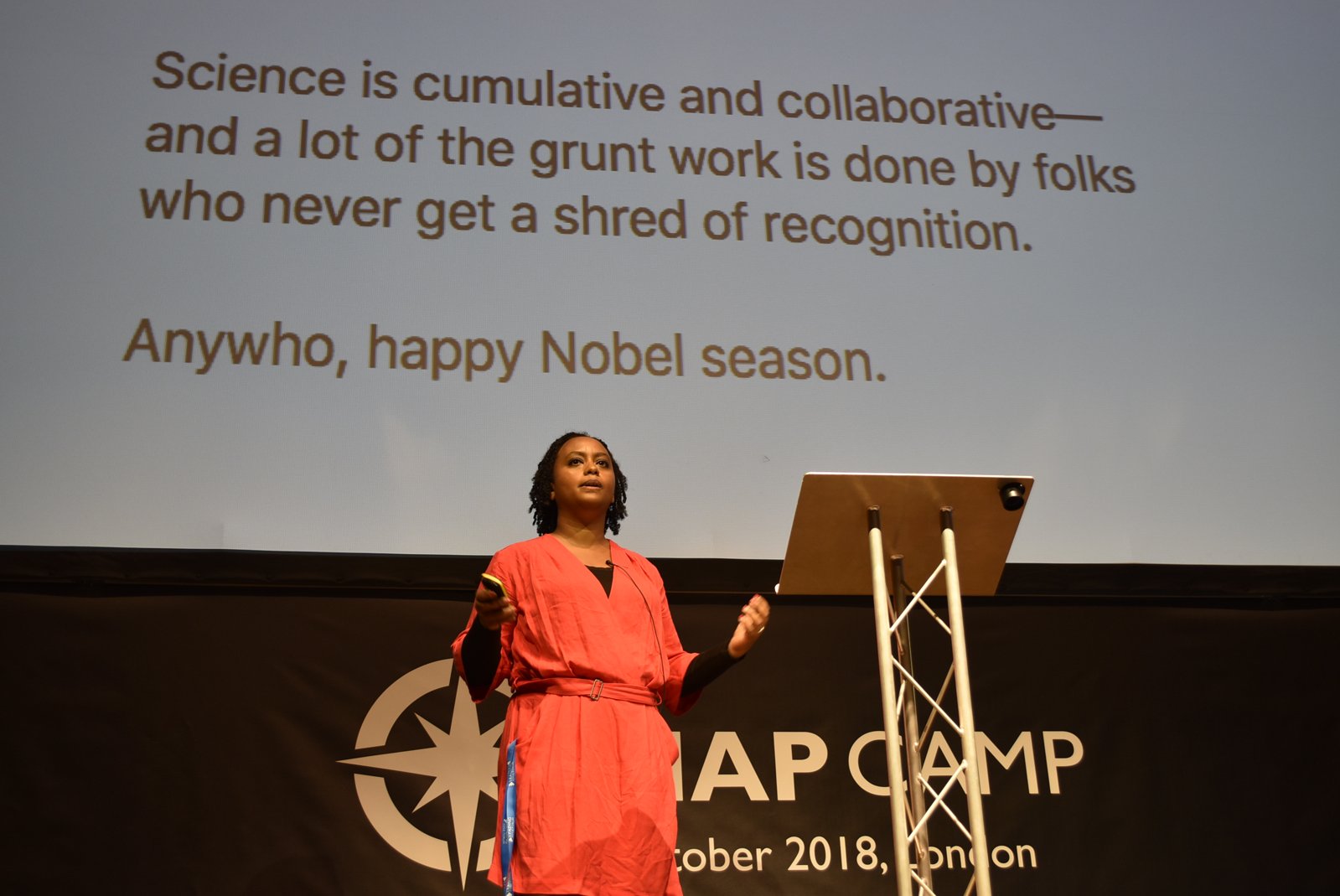
A spot on comment about Nobel awards
… and explained why and how to use maps to increase your chances for success:
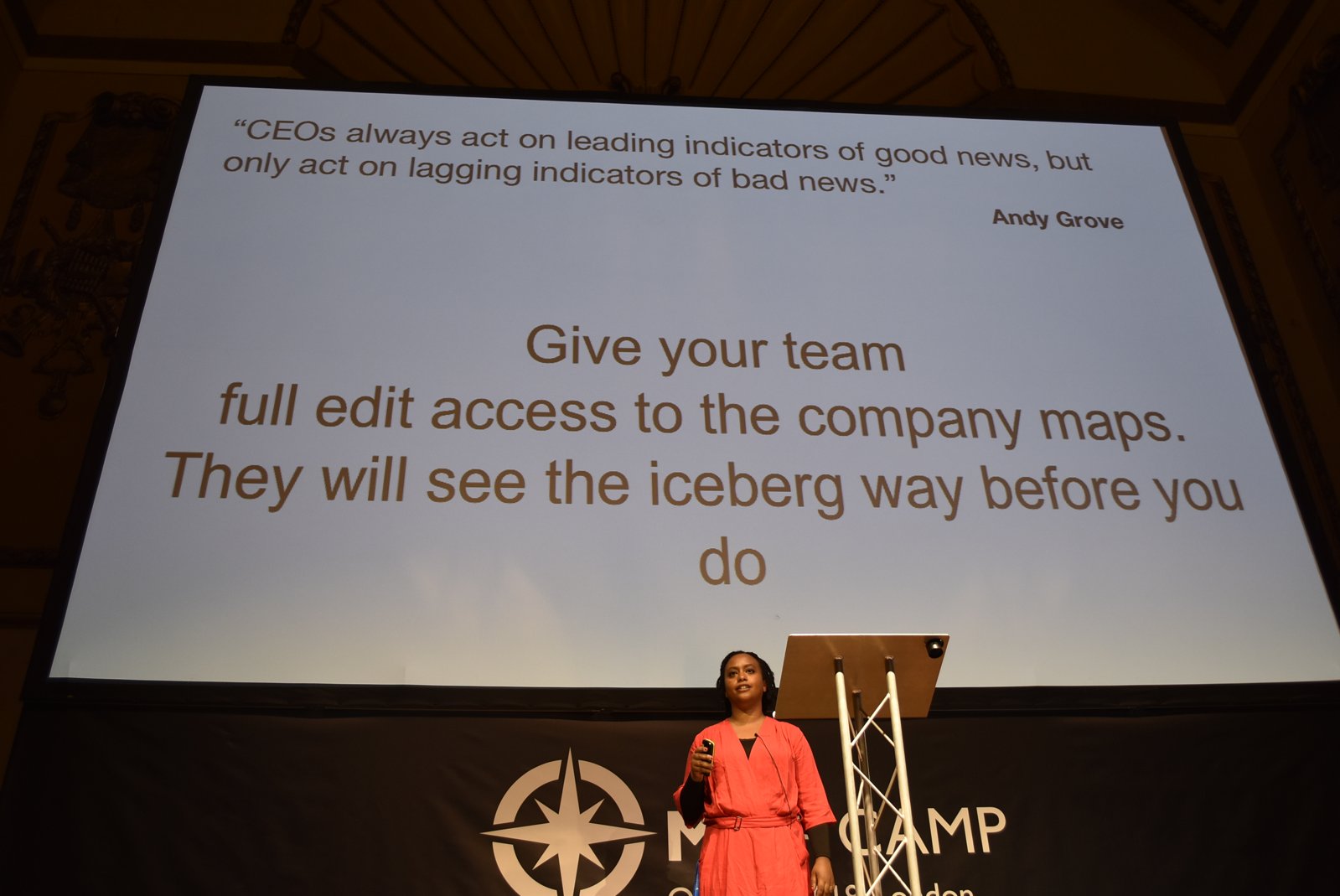
That is actually one of the first cases where someone talks publicly about enabling the entire company to map. Of course, there is a question how to scale it for a larger organisation (hint - a paper will be published shortly by me).
Finally, Yodit touched a bit of mapping doctrine:
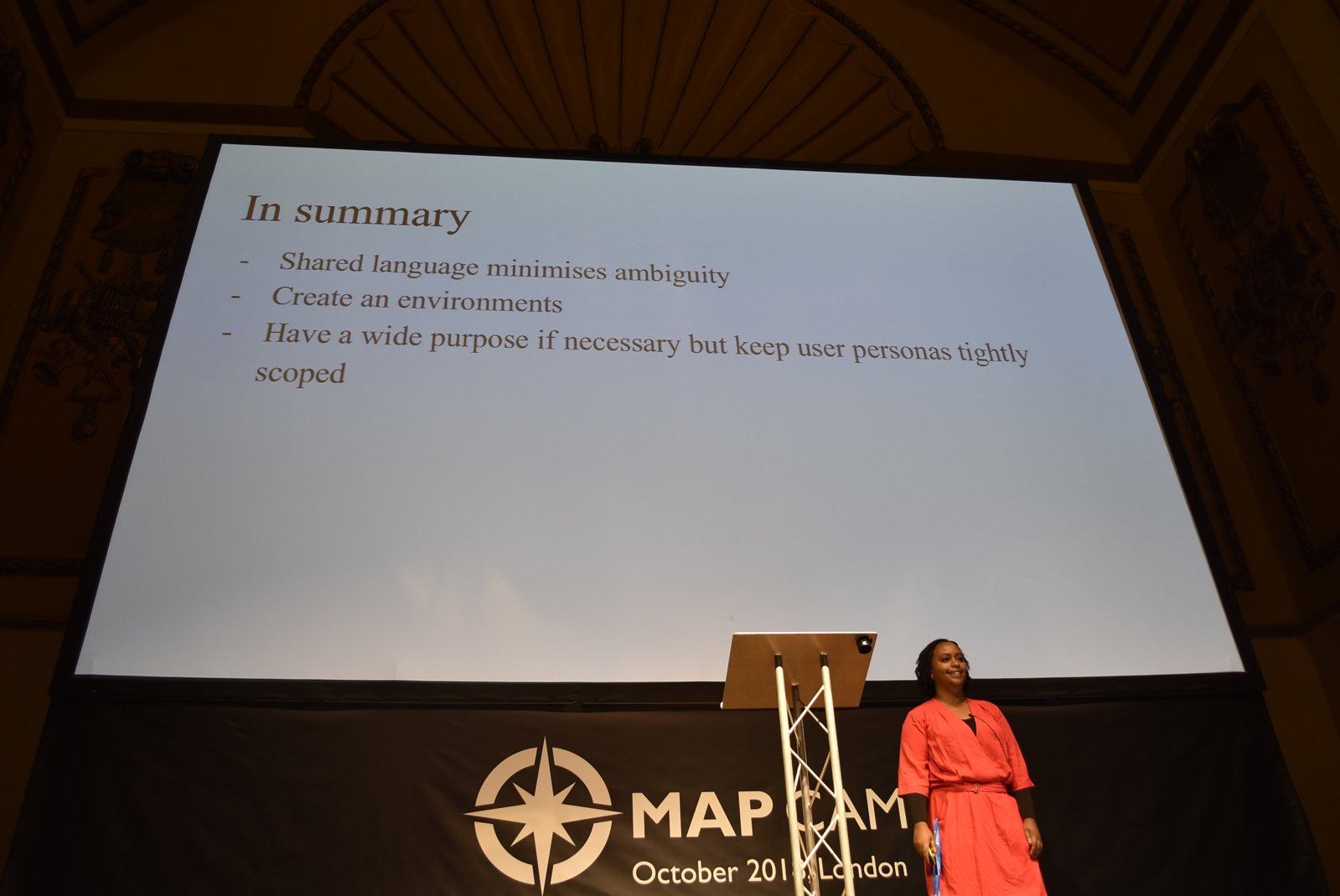
- shared language is a must have. Without it, communication does not exist.
- it is important to actively manage scopes of work - Think Big when considering your vision, and Think Small when considering your scope of work.
Overall, a very, very good presentation, and I hope, I will not forget all the lessons!
Presentation #7: Maps and the Empathy Economy
Highlights: Focus on what is important to end users. Think about your customer customers. If they want smart cities, provide them necessary data, but do not waste time on reinventing f.e. middleware.
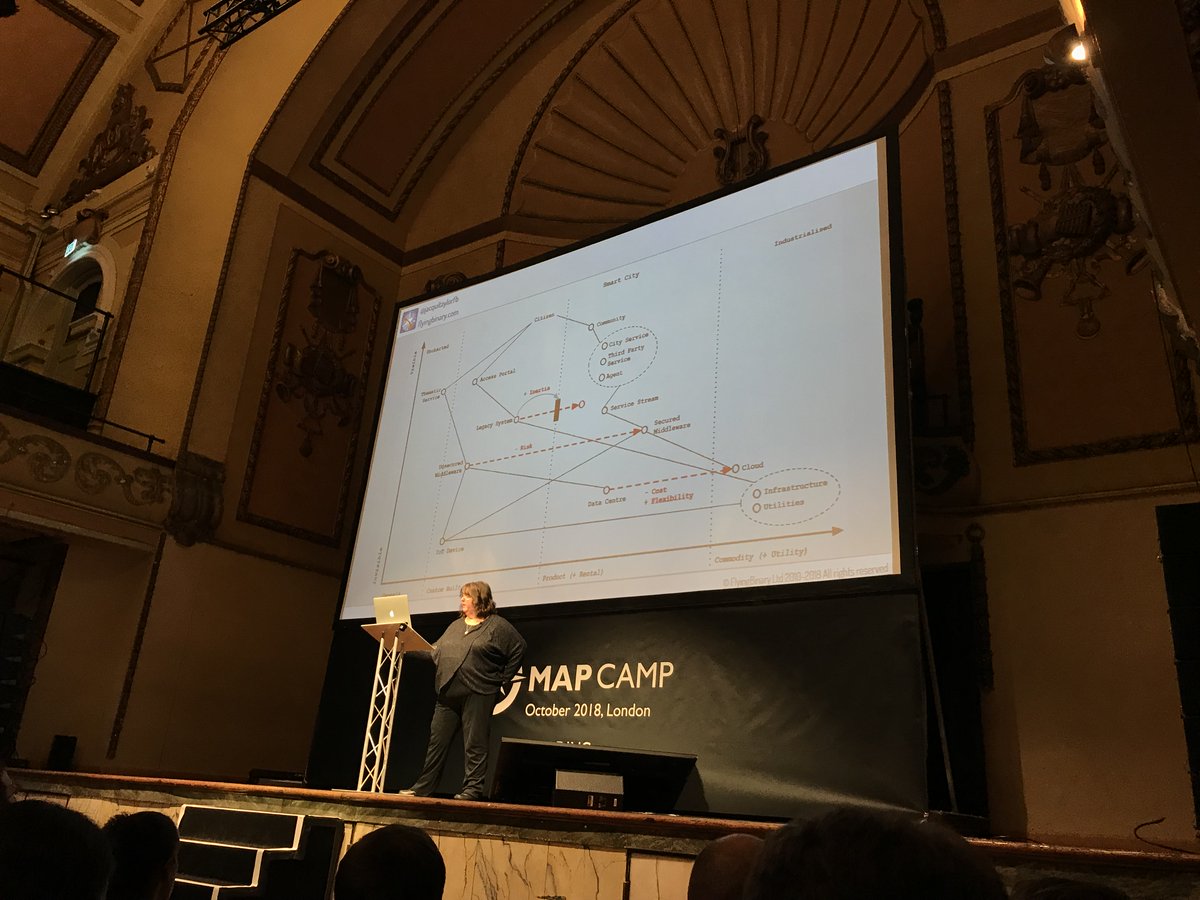
Photo by @john.grant, Link to the original tweet
Presentation #8: Maps, huh! What are they good for?
Highlights:
If I had to mention just one thing, it would be this:
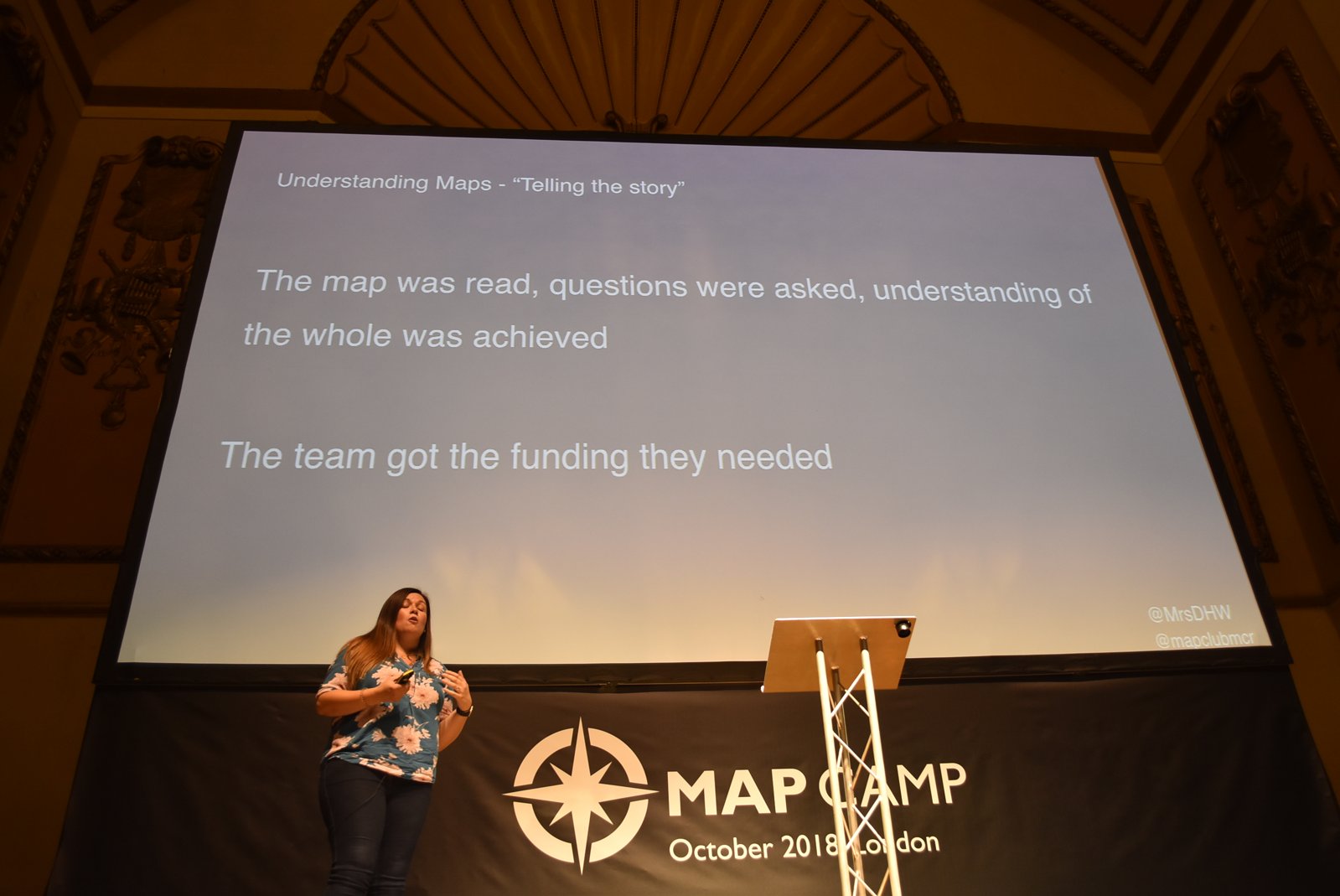
"The execs actually turned the pages over & said 'huh, what's that?' when they got to the map," says @MrsDHW. An actual conversation happened; understanding was created. Perfect example of @swardley's point that the map is a conversation tool. #map18 #mapcamp https://t.co/PUosyOKS1q
— Caitlin McDonald (@cmcd_phd) October 3, 2018
The underlying message is that maps tell a story - they prompt questions which cause understanding which causes funding.
Then, there was a number of really good advice about mapping practices:
- maps are best if they are created by a team. It has to be inclusive, because otherwise you will miss the diversity of thoughts.
- maps should be created by those who will benefit from them.
- mapping is a collaborative activity that needs to be practices, shared and repeated. It takes time to master it.
- proper organisation of a company saves time and cost.
Presentation #9: Mapping and Education
by Janet Hughes
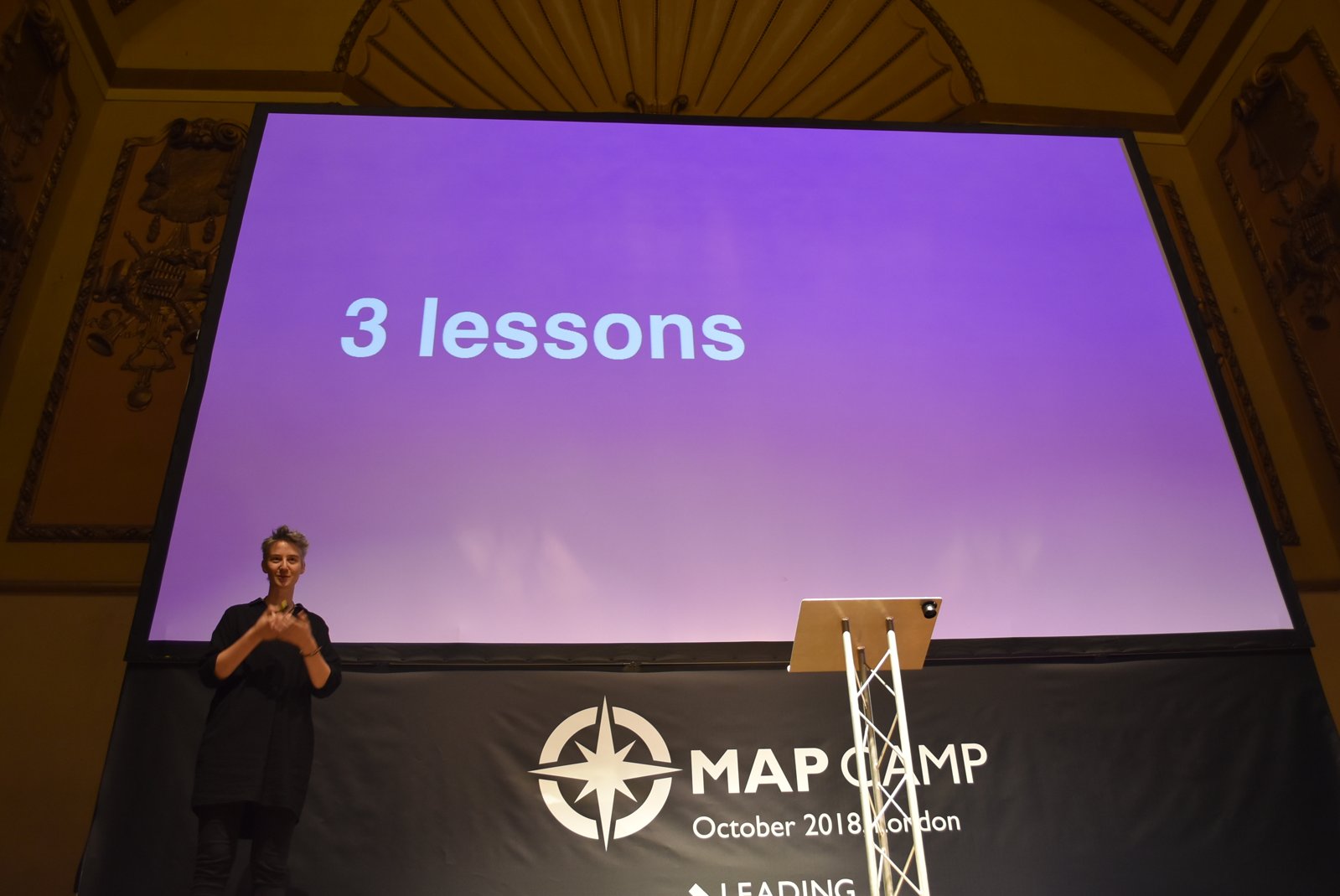
Janet basically provided a checklist that I think should be run at least monthly at every company. The checklist should contain every single aspect that Janet brought up:
-
right question
- what questions are we trying to answer?
- what is causing us waste and / or pain?
- how do all these things relate to each other?
- what biases, patterns, inconsistencies do we have?
- is our approach still suitable for today’s context?
- what capabilities will we need in future?
- how is this market going to develop?
- what is the most useful thing we could invest in this year?
- why are we making this decision?
-
right people
- makes partial maps
- get all the people in the room
-
find a right unit of analysis (services vs patterns vs structures and systems)
I think that in that context, maps are useful as a communication mean, but the value of this checklist cannot be underestimated.
Presentation #10: Mapping a serverless startup
by Drew Firment
The essence of the presentation is depicted by the two slides below:
- Use mapping to figure out what is important for end users (servers and ops are not), and stop wasting time on everything else.
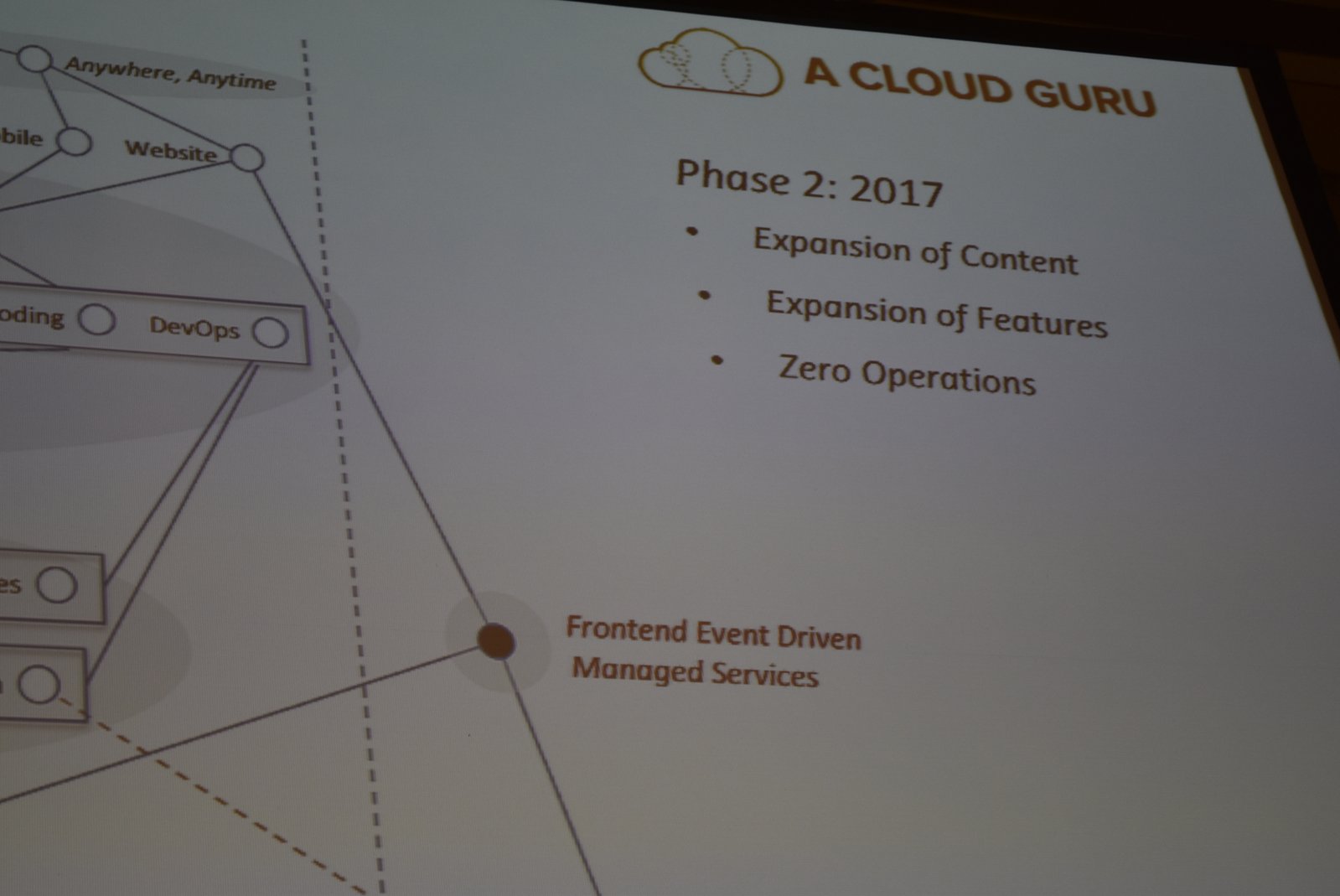
- Enjoy the benefits of ultra efficient operations.
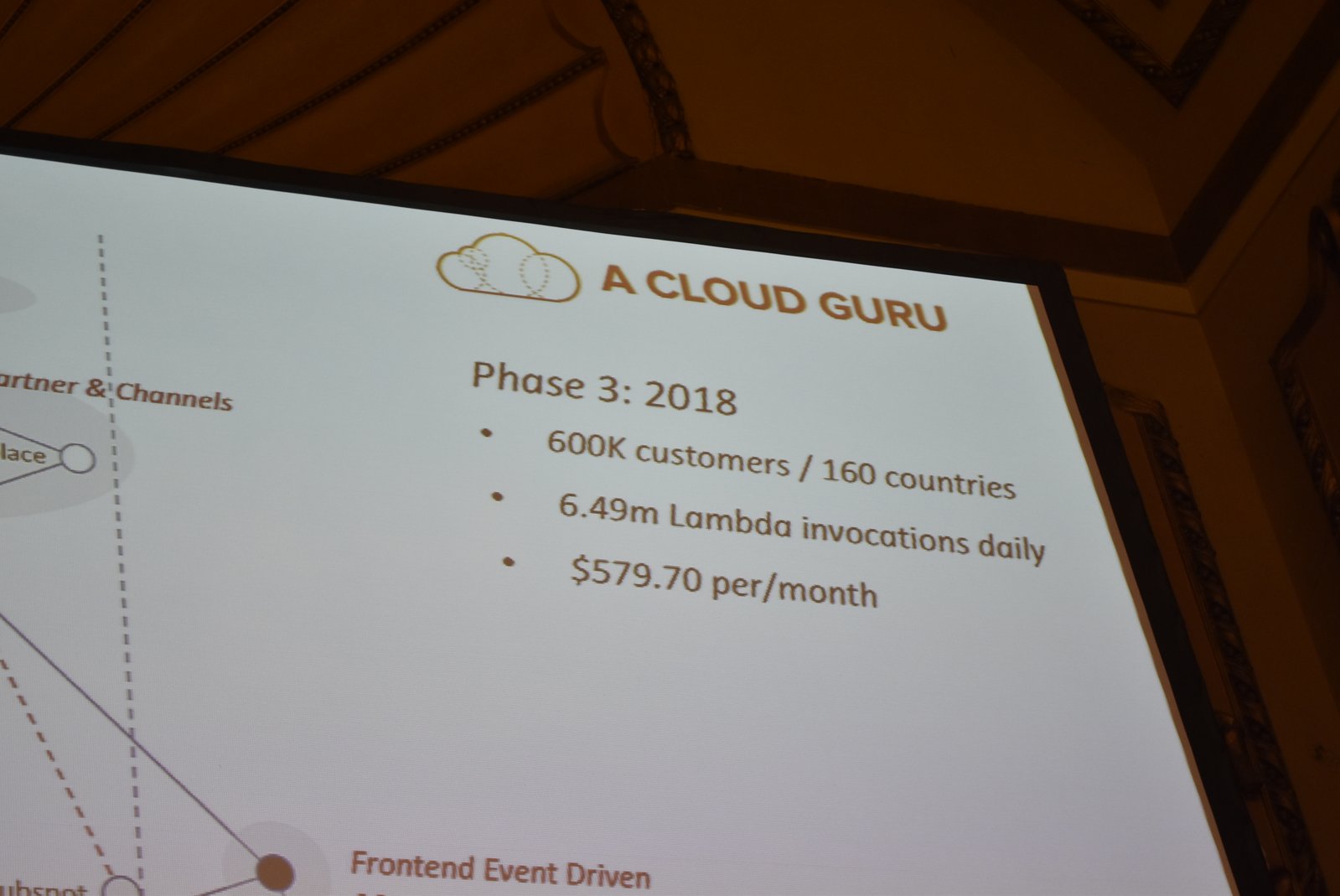
Side note - that will work only if you get the user needs right. ACloudGuru did.
Presentation #11: Collaboration through Mapping
by Sal Freudenberg
The key message was this:
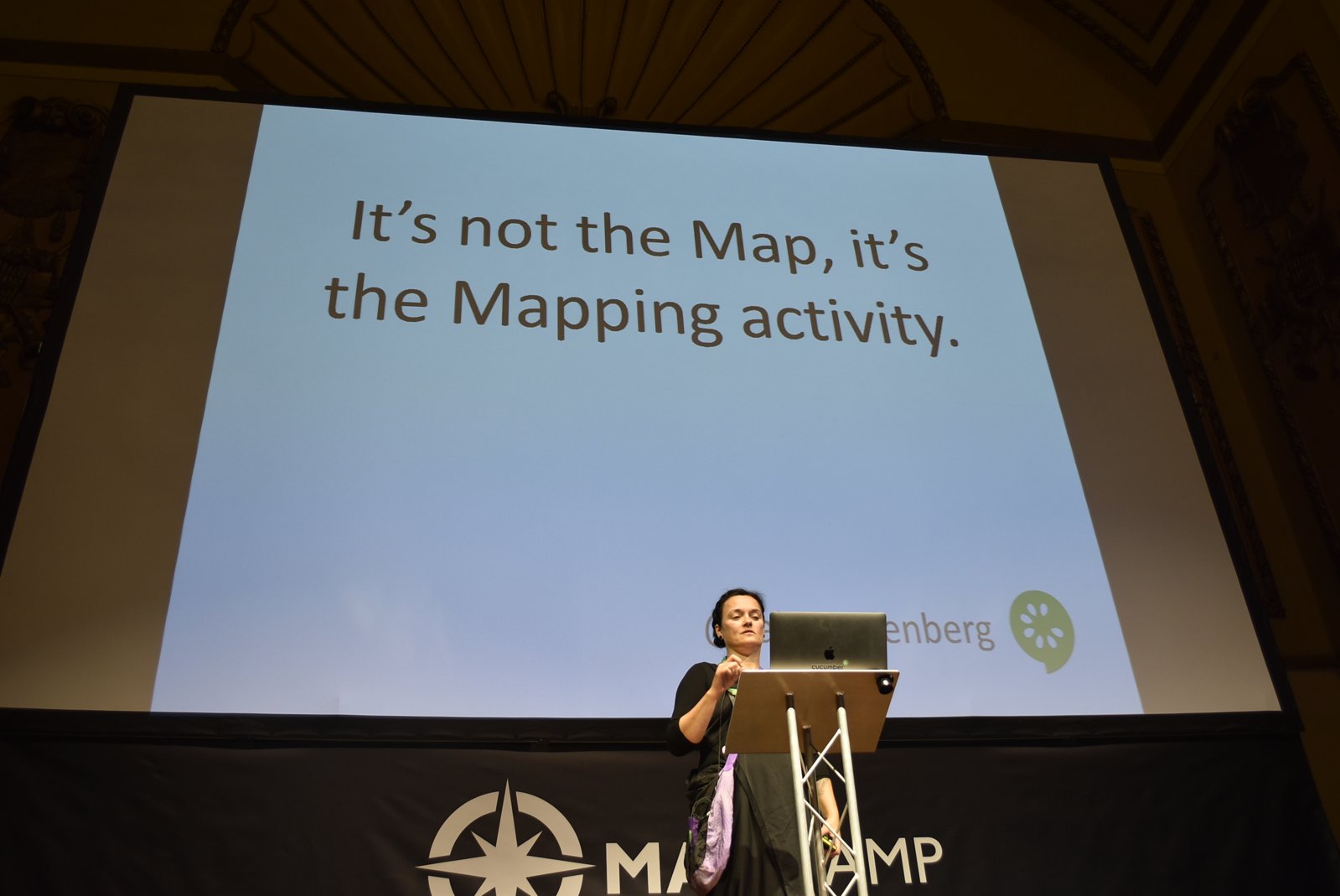
While a map itself might be useful, it is far more important to focus on the process that leads to the map, as in the process we might discover an elephant in the room (or a chain of elephants) that nobody wants talk about, but which are critical for future success. Maps enable honest discussion about what can we do and what needs to be done.
This post is editable. Feel free to improve it!
Photos by @map_camp, CC-BY-SA, link to all of them.
Keving Marks Notes:
Over 400 people gather in London to share successes from using the Wardley Mapping strategic approach that has become a core part of UK Government digital leadership.