
Threat acquisition is gameplay that can be often applied in a scenario very similar to the Gameplay - Embrace&Extend, but also has a couple of variations that might be not so obvious.
Basically, a competition appears that offers a more efficient version of what you are providing. The competition can change the Evolution of a given product but does not have to. Early _Products (situation D) are especially vulnerable to new players entering the market and using differentiation to gain market share, but since the demand is growing, everyone seems to be happy about that state of the matter; it does not matter what you do, the company will grow.
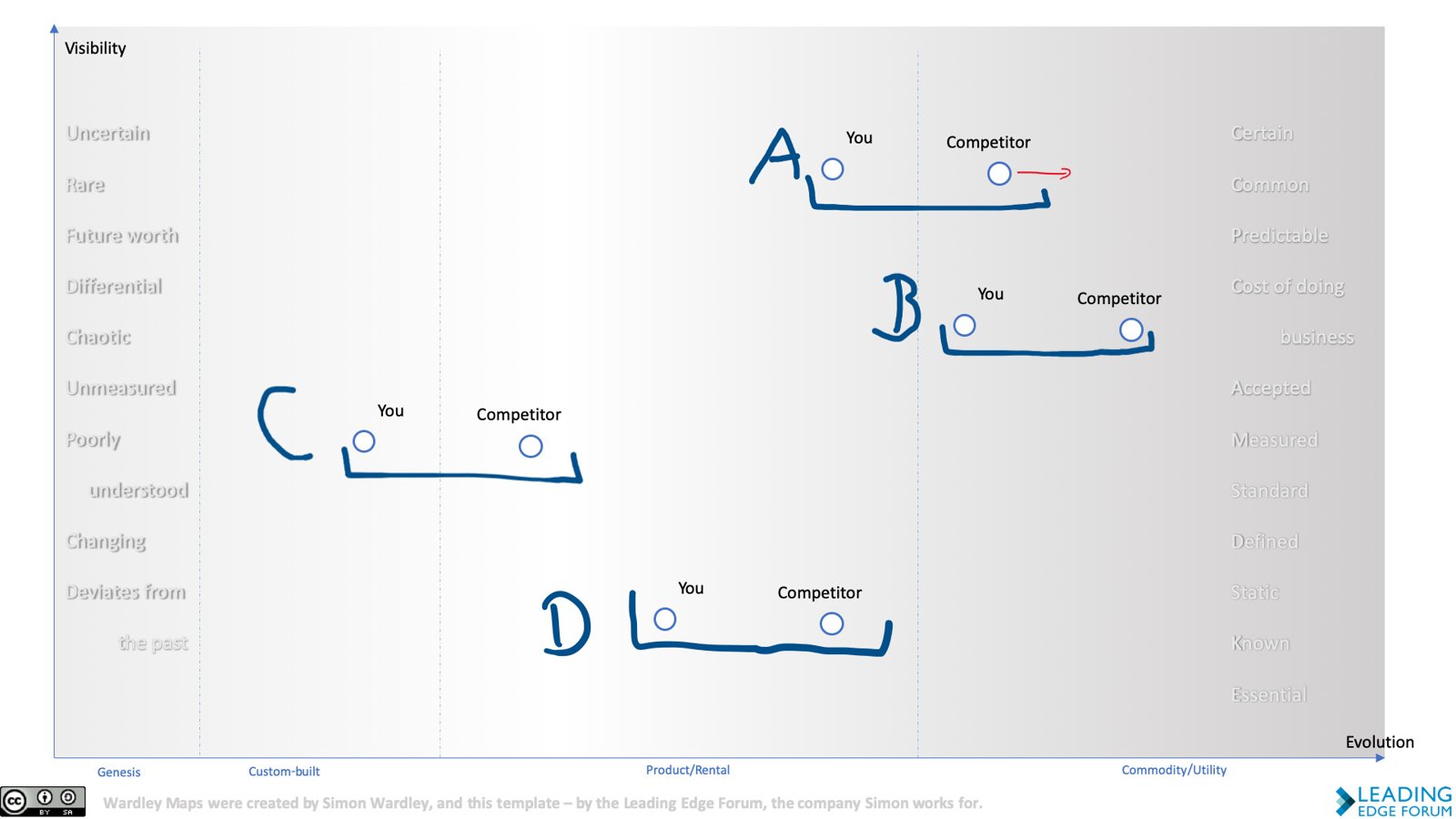
Figure 1: Simple cases of threat acquisition.
- The situation described by A is hazardous. The competitor has a significant efficiency advantage and is very likely to conquer the entire market. Early, when the competitor had not managed to win market trust, it is possible to acquire it, either to shut it down or for know-how. The latter might not be enthusiastically welcome by your shareholders, as they will diversify on the level of portfolio and expect you to maximise local profits, not to spend money on long term sustainability.
- The situation described by B is rarely experienced. Large scale prevents threat acquisitions and encourages mergers to increase the efficiency of working capital.
- The situation C is promising. Your competitor has actually built a product more efficient than your custom-built offering. If you spot that early enough, you can acquire the competitor (and its know-how), and if you maintain some isolation between an old and new business, you can exploit your customers - let them chose between expensive, custom-built approach and more affordable product. The separation is essential, as the custom-built has to address also the need for a personal touch, which Products should not offer.
This sort of gameplay is reactive and buys you time. It may be not welcome by your shareholders - as they may be very interested in investing in the future markets and milking existing ones. Bear that in mind, Blockbuster had a couple of opportunities to buy Netflix, but were those real opportunities?
Let’s draw a line here. Those were simple usages. Now, the more advanced ones:
The threat does not have to be a direct threat to the company service. It might be a threat to a constraint. When your service is in transitional phases of Evolution, you are more than likely to have some limitations that prevent new entrants from exploring the market before you. If you discover that there is a startup (or an initiative) capable of relaxing the constraint, you can acquire it and prevent it from offering the service to your competitors.
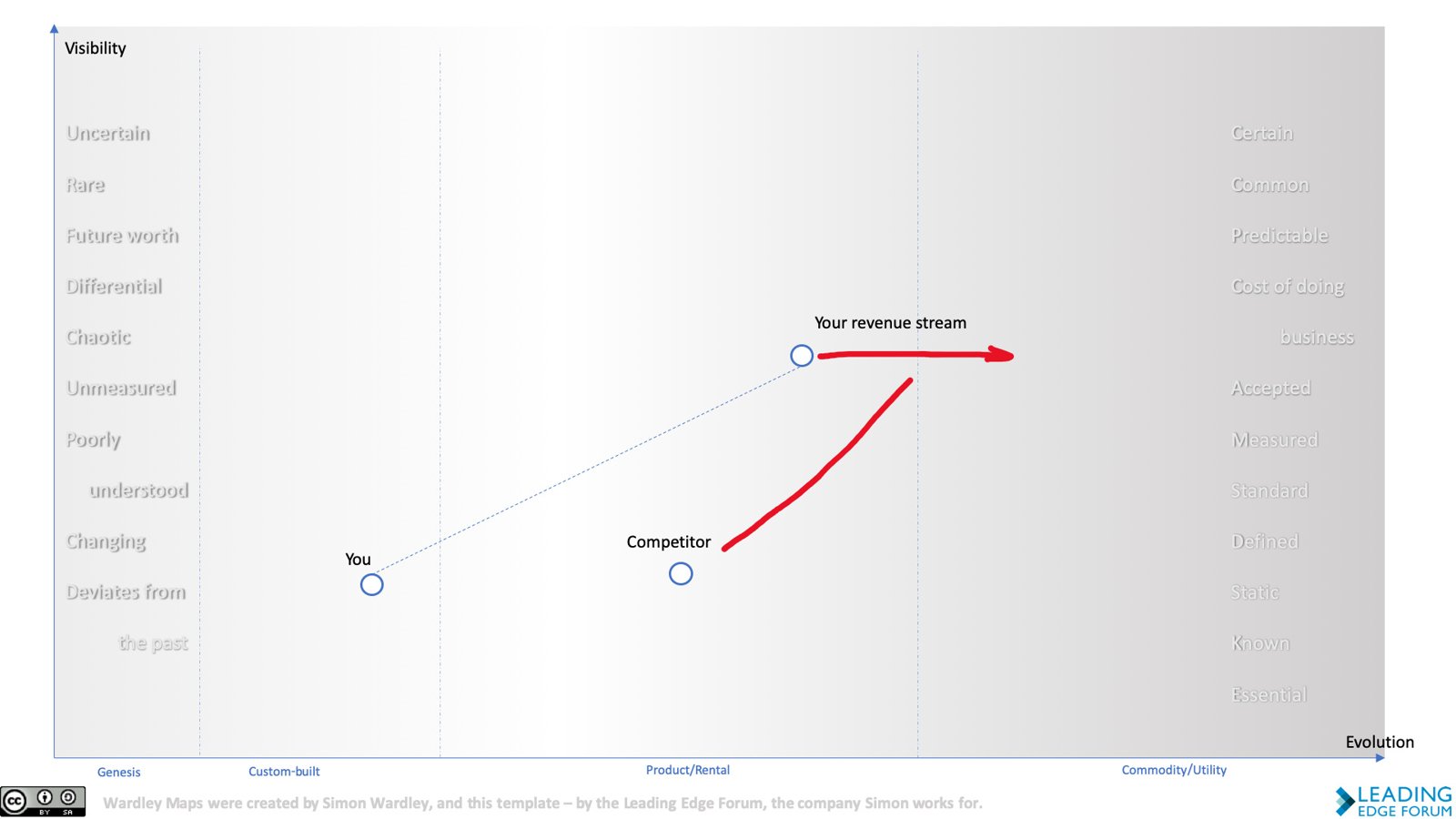
Figure 2: A competitor undermining your barriers to entry that protect your business.
The other case is when the change is happening much above the company service, and it promises a dramatic change in a value chain. The company, through proper acquisition, can slow down that process and buy time. To an external observer the transaction may look “weird”, as without knowing the value chains (Figure 3) it is very hard to figure out the sense of seemingly unrelated acquisition. Even more, the buying company has to be extremely careful about the communication, as it does not want to hint to wider audience where is the opportunity in the market.
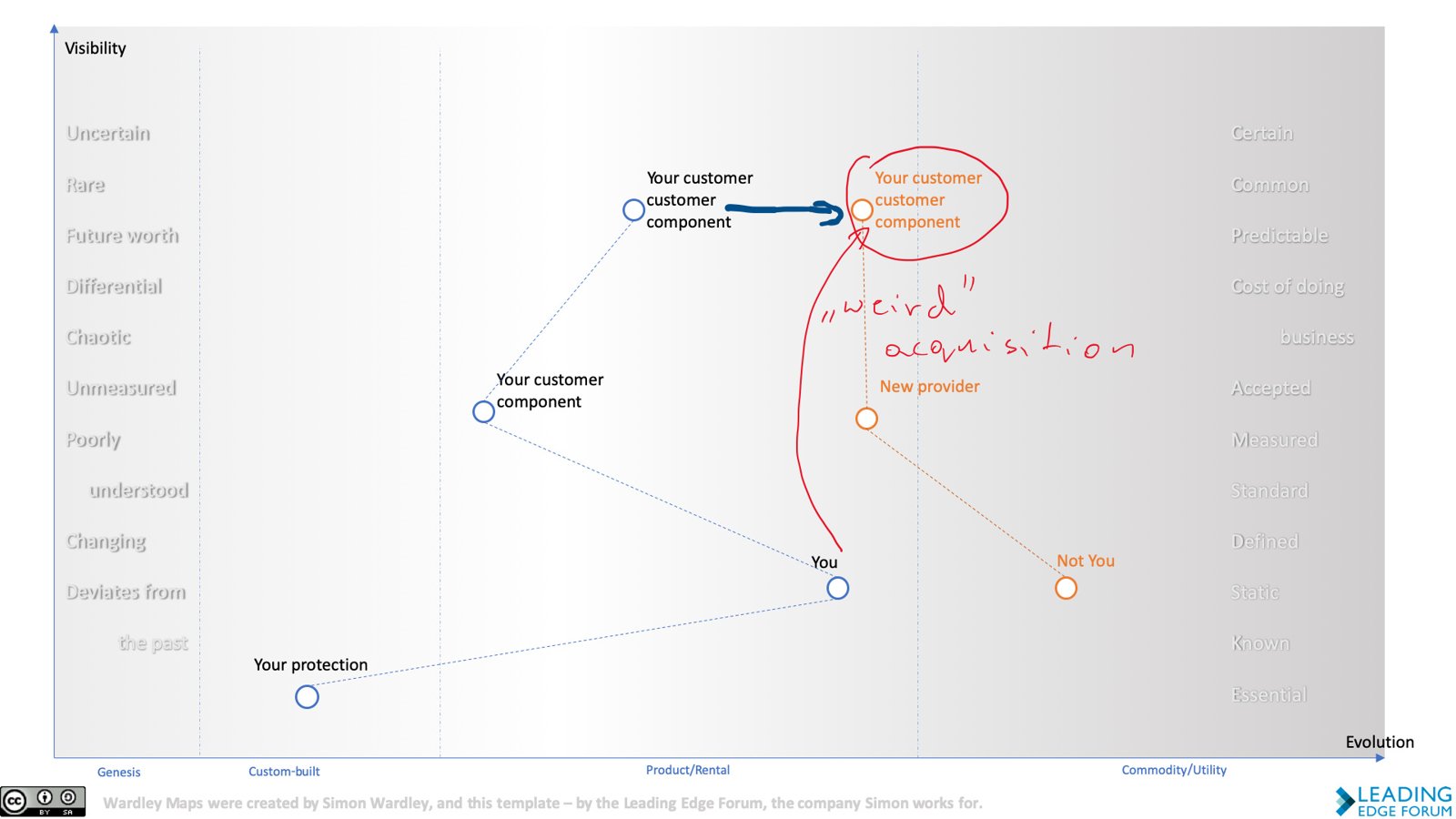
Figure 3: Preventing a change.
To sum up:
- A threat can materialise in different places in the value chain.
- If it is a small company, it can be acquired most of the time.
- It has to be acquired in a timely manner.
- Official communication (PR) may not hint the true reason of the investment, but the story has to be plausible.
- Obviously, time bought must be worth more than money spent.
Some companies are really good at playing this game:
What would you add here?